Stainless Steel Crown vs. White Zirconia Crown: Choosing the Right One for Your Child
Posted on 10/8/2025 by NC Pediatric Dentistry |
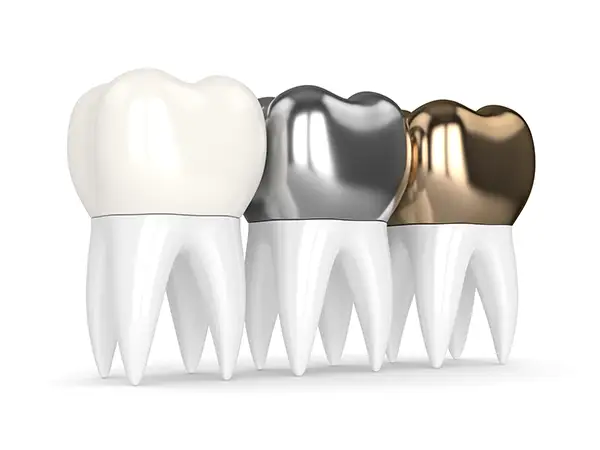 When your child needs a dental crown, one of the first questions parents ask is whether to go with a traditional stainless steel crown or a white zirconia crown. Both options are widely used in pediatric dentistry, and both do an excellent job of protecting a damaged or weakened tooth. The right choice depends on factors like which tooth needs the crown, your child’s age, and your family’s priorities regarding appearance. When your child needs a dental crown, one of the first questions parents ask is whether to go with a traditional stainless steel crown or a white zirconia crown. Both options are widely used in pediatric dentistry, and both do an excellent job of protecting a damaged or weakened tooth. The right choice depends on factors like which tooth needs the crown, your child’s age, and your family’s priorities regarding appearance.
In this guide, we’ll walk through how each type of crown works, where each one excels, and what to consider when making your decision. Our restorative dentistry team at NC Pediatric Dentistry places both types of crowns regularly and can help you choose the option that makes the most sense for your child’s specific situation.
On This Page
Why Children Need Dental Crowns
A dental crown is a cap that fits over a damaged tooth to restore its shape, strength, and function. In pediatric dentistry, crowns are most commonly used on baby teeth that have extensive decay, have undergone a pulpotomy (a procedure similar to a root canal for baby teeth), or have fractured in a way that a standard filling can’t repair.
Some parents wonder why it’s worth placing a crown on a baby tooth that will eventually fall out. The answer is that baby teeth serve critical functions while they’re in place. They hold space for the permanent teeth developing beneath them, support proper chewing and nutrition, and play a role in speech development. Losing a baby tooth too early can cause neighboring teeth to drift into the gap, creating alignment problems that may require orthodontic treatment later.
Crowns allow us to preserve the tooth until it’s ready to come out naturally. The two most common crown materials in pediatric dentistry are stainless steel and zirconia, and each has distinct advantages.
Stainless Steel Crowns: The Tried-and-True Option
Stainless steel crowns have been the standard in pediatric dentistry for decades, and for good reason. They’re incredibly durable, cost-effective, and can be placed in a single visit with minimal tooth preparation.
These crowns come prefabricated in a range of sizes. During the appointment, your child’s dentist selects the size that best fits the tooth, trims and contours it as needed, and cements it into place. The process is straightforward, which means less time in the chair for your child.
Durability is where stainless steel crowns really shine. They can withstand the heavy chewing forces that back teeth (molars) experience without cracking, chipping, or wearing down. They’re also very forgiving in less-than-perfect conditions; if a tooth has subgingival decay (decay that extends below the gumline) or if moisture control is difficult during the procedure, stainless steel crowns still bond reliably.
The main drawback is appearance. Stainless steel crowns are silver-colored, which makes them noticeable when placed on teeth that are visible when your child smiles or talks. For back molars, this is rarely a concern. For front teeth or premolars, some families prefer a more natural-looking option.
White Zirconia Crowns: The Esthetic Alternative
Zirconia crowns are made from zirconium dioxide, a ceramic material that is both strong and tooth-colored. They’ve become increasingly popular in pediatric dentistry over the past decade as families have expressed more interest in natural-looking restorations for their children.
The biggest advantage of zirconia crowns is their appearance. They closely match the color of natural teeth, making them an excellent choice for front teeth and any tooth that’s visible when your child smiles. For children who are self-conscious about the look of a silver crown, zirconia can make a real difference in their confidence.
Zirconia is also biocompatible, meaning it’s well-tolerated by the gum tissue. It resists plaque accumulation better than metal, which can be beneficial for gum health around the crowned tooth.
There are a few trade-offs to consider. Zirconia crowns require more precise tooth preparation than stainless steel crowns. The tooth needs to be shaped to fit the crown exactly, which sometimes means removing slightly more tooth structure. The placement process can also take a bit longer, though the difference is usually small. Our team uses advanced dental technology to ensure precise fit and placement.
Zirconia crowns are also less forgiving in challenging clinical situations. If the tooth has significant subgingival decay or if the child has difficulty staying still during placement, achieving a proper seal can be more difficult than with stainless steel.
How to Choose the Right Crown for Your Child
The best crown for your child depends on several factors that your pediatric dentist will evaluate during the appointment.
Tooth location is usually the most important consideration. For back molars that aren’t visible when your child smiles, stainless steel crowns are often the most practical choice. They’re durable, efficient to place, and work reliably in the wet, hard-to-reach environment of the back of the mouth. For front teeth and visible premolars, zirconia crowns offer a natural appearance that many families prefer.
The extent of the decay also matters. Teeth with large cavities that extend close to or below the gumline may be better served by stainless steel crowns, which are more adaptable to imperfect margins. Zirconia works best when the tooth can be prepared to clean, well-defined margins above the gumline.
Your child’s age and cooperation level play a role as well. Zirconia crowns require a bit more precision during placement, so they work best when the child can stay relatively still. For very young children or those with significant anxiety, stainless steel crowns may be the safer, faster option.
Your family’s preferences matter too. If appearance is a high priority and the clinical conditions support it, zirconia is a great option. If durability and simplicity are the top concerns, stainless steel is hard to beat. Your dentist will talk you through the options and help you make the decision that’s right for your child’s specific tooth.
Talk to Your Pediatric Dentist
Both stainless steel and zirconia crowns are excellent tools for protecting your child’s teeth, and the right choice comes down to the specifics of your child’s situation. If your child needs a crown or you’d like to learn more about your options, NC Pediatric Dentistry has offices throughout North Carolina ready to help. Visit our locations page to find a convenient office and schedule your child’s appointment.
Frequently Asked Questions
How long do pediatric dental crowns last?
Both stainless steel and zirconia crowns are designed to last until the baby tooth naturally falls out. With proper oral hygiene, most crowns stay in place for several years without any issues.
Does getting a crown hurt my child?
The tooth is numbed before the crown is placed, so your child should not feel discomfort during the procedure. Some children experience mild sensitivity for a day or two afterward, but this usually resolves quickly on its own.
Will a crown affect how my child’s permanent tooth comes in?
No. When the baby tooth is ready to fall out, the crown comes out with it. The permanent tooth erupts normally into the space. Crowns actually help ensure the permanent tooth has enough room by keeping the baby tooth in place until the right time.
Can my child eat normally with a dental crown?
Yes. Both stainless steel and zirconia crowns are strong enough for normal eating. We recommend avoiding very sticky or hard candy, which can loosen any dental restoration. Otherwise, your child can eat, chew, and brush as usual.
Are zirconia crowns more expensive than stainless steel?
Zirconia crowns generally cost more than stainless steel due to the material and the additional precision required during placement. Your restorative dentistry team can discuss the specifics during your child’s appointment, including any insurance coverage that may apply.
|
|